
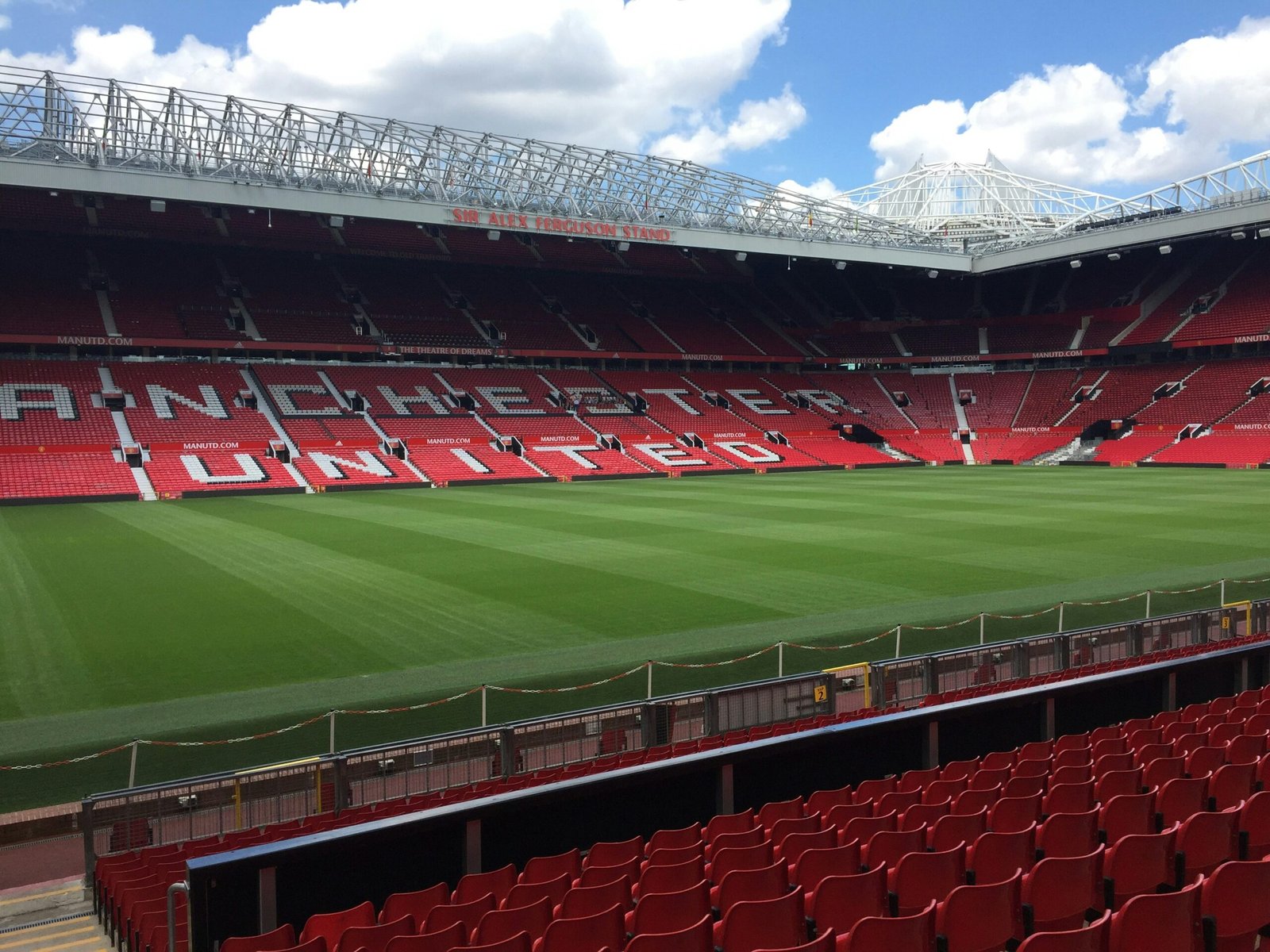
Michael Carrick has done something remarkable, but remarkable is not the same as enough.
Let me be honest with you: watching Michael Carrick stride the Old Trafford touchline these past four months has felt genuinely good. He beat City. He beat Arsenal. He sent this battered, hollowed-out squad into the Champions League. He did all of that, and supporters rightly gave him a standing ovation for it.
But INEOS now faces one of the biggest decisions of its ownership, and sentiment, however well-earned, cannot carry Manchester United back to the top of European football. This is my view, and I hold it with some discomfort, because I respect Carrick enormously. Still, I believe the club should replace him before next season begins, and I want to tell you exactly why.
His Middlesbrough record carries a warning that nobody wants to hear
Before Carrick walked back through Carrington’s doors in January, he had spent two and a half years at Middlesbrough, and that spell tells a story that gets buried far too quickly in the warmth of his current run. He arrived at a club in freefall, dragged them to the play-offs in his first season, and produced some genuinely breathtaking attacking football along the way. Chuba Akpom scored 28 goals, and Boro fans witnessed the most exciting football the Riverside had seen in a generation.
Then the wheels came off. Carrick lost 13 of his final 20 matches, with Boro slumping to a tenth-place finish and failing to score in four of their last six games. The same tactical stubbornness that created those glorious early highs eventually became his undoing.
Fans grew frustrated because he didn’t seem to have a Plan B, and Carrick himself said he would not change his style because it was “what I know and what I believe in.” That is an admirable stance, but at a club preparing to re-enter the Champions League with a squad that still needs a massive rebuild, refusing to adapt comes with a heavy price tag.
The fade at Middlesbrough was not a fluke, an injury crisis, or just bad luck. It revealed a structural issue with how Carrick operates under sustained pressure, and United cannot afford to discover that same flaw one year deeper into a multi-hundred-million-pound rebuild.
The Sunderland draw already showed the ceiling of his Plan A
Last Saturday at the Stadium of Light, United were held to a goalless draw in which Sunderland had the better chances throughout, with goalkeeper Senne Lammens denying Brian Brobbey and Lutsharel Geertruida hitting the post.
Carrick made five changes, and United struggled to test the hosts, with only a stoppage-time effort from Matheus Cunha posing any real danger. Supporters waved it away as a dead rubber, which it largely was. But the performance exposed something: without key starters, United looked every bit a side made up of stand-ins too rusty to make a difference, and nobody furthered their cause.
Imagine that pressure in a Champions League group stage, where the fixtures come thick and fast and rotation is essential. The depth of this squad remains thin, and a manager who relies so heavily on a first-choice system, who produced just five wins from his final 20 games at Middlesbrough when the pressure mounted, gives INEOS very little margin for error.
United’s next permanent manager needs to adapt fluidly, shift shapes mid-game, and get performances out of squad players. The Sunderland performance, even with low stakes, offered a warning of what life looks like when Carrick’s Plan A gets found out.
Manchester United need a manager built for the Champions League, not learning it
Here is the biggest concern, and the one that supporters urgently need to face. Carrick’s only permanent managerial job before this interim spell was in the Championship, and his record there does not scream elite experience. The question on many fans’ lips is whether he is ready for the Champions League, and it is a fair one.
Pep Guardiola took Barcelona without prior senior managerial experience, yes, but he arrived with five years of deep tactical immersion under Johan Cruyff’s philosophy and a squad already stocked with the world’s best players. Carrick enters the Champions League stage with a squad still being rebuilt, a transfer strategy still taking shape, and a tactical approach that has shown clear vulnerabilities once opposition managers get enough time to analyze it.
Manchester United have made a decision on Carrick’s Old Trafford future
Sky Sports noted that names like Julian Nagelsmann, Luis Enrique, and Oliver Glasner were considered, and that emotion attached to Carrick may be blinding logic. That is a blunt observation, but it lands. United tried the “club legend” route with Ole Gunnar Solskjaer, a man who also produced exciting early results, generated massive affection among supporters, and ultimately fell short of delivering major silverware. You can’t ignore the parallel. A manager who fires up a squad for a few months is one thing, but United need someone capable of sustaining that across a full season in Europe.
Michael Carrick deserves immense credit for what he has done. He rescued a season that was drifting towards mediocrity and put genuine pride back in the shirt. But Manchester United’s ambition cannot stop at Champions League qualification; it has to reach for titles again.
Back in training – Arsenal handed massive injury boost before Burnley clash
For that to happen, INEOS owes it to this club to look past the feel-good story and ask the hardest question of all: Is Michael Carrick truly the best manager available to lead this club back to the very top? My honest answer is no, and I suspect, behind closed doors, INEOS already knows it.












[…] 3 Reasons Man Utd should replace Carrick […]