
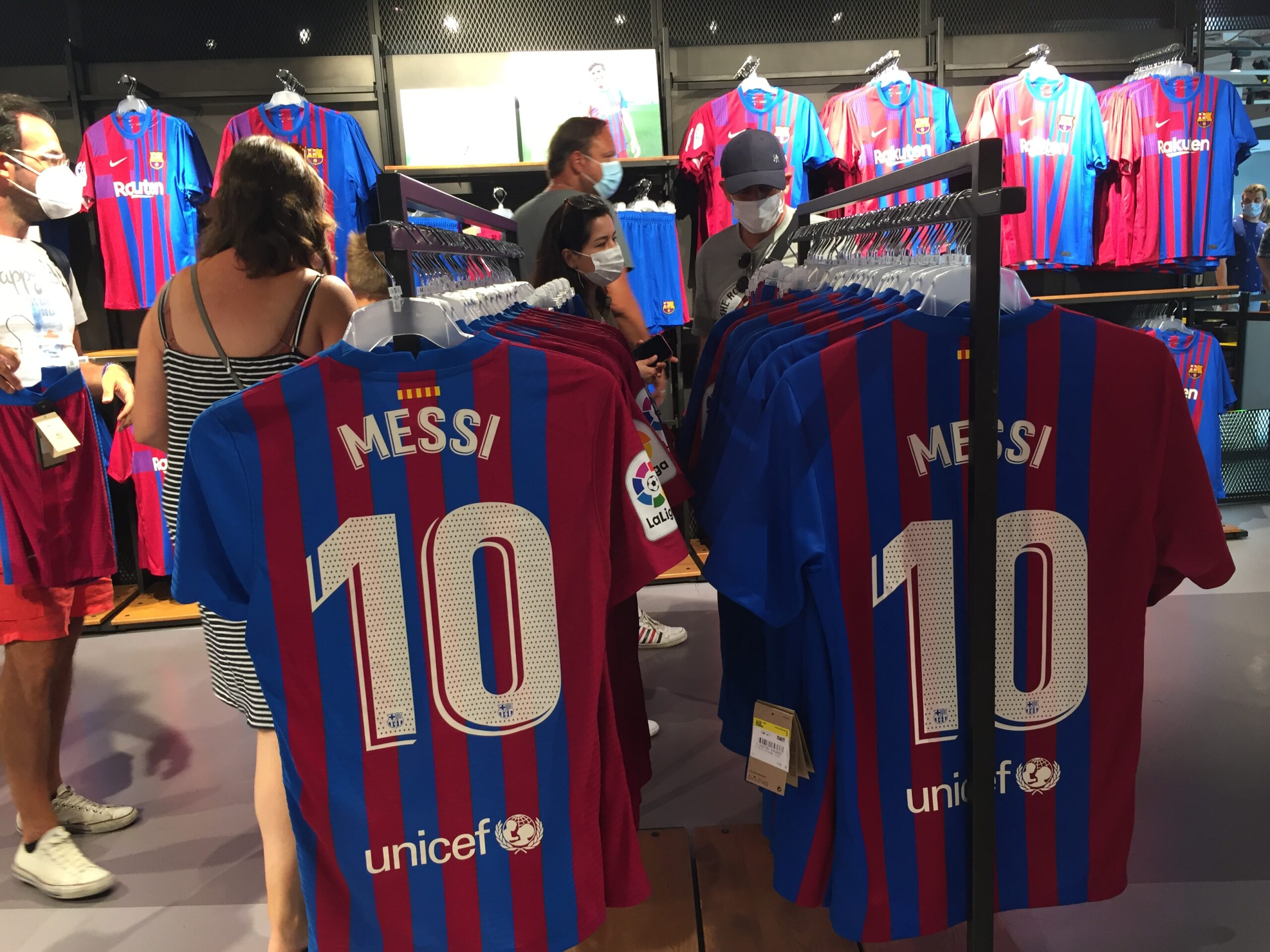
A shirt number can become part of Barcelona‘s story. The Barcelona No.10 shirt carries that status because generations of exceptional attackers and creators have given the digit a distinct identity. For a casual supporter, it may look like another squad number. Inside Barça folklore, that small number links Maradona, Rivaldo, Ronaldinho, Messi and Lamine Yamal.
Football once assigned numbers largely by position. The goalkeeper took No.1, defenders occupied the early numbers, while No.10 commonly belonged to the chief creator. That player often received the ball between midfield and attack, looked for gaps, set the rhythm and produced the decisive moment. Pelé and Maradona helped turn the number into a worldwide symbol of individual brilliance.
Maradona’s Barcelona spell lasted only two seasons, yet the Argentine wore No.10 during a period that still has enormous historical importance. Barça signed him from Boca Juniors in 1982 for a then-record 1.2 billion pesetas, equal to about €7.2 million. Injuries and hepatitis disrupted his time in Catalonia, although he still scored 38 goals in 58 official matches. His stay never reached the heights many expected, but Maradona in the blue and garnet shirt became part of the number’s mythology.
The later lineage became striking. Rivaldo arrived in 1997 and eventually inherited No.10 in 2000 after several players had held it during the fixed-number era. The Brazilian played as an attacking midfielder or left winger and scored 136 goals in 253 matches for Barça, winning two league titles and the 1999 Ballon d’Or. His bicycle kick against Valencia in 2001, which secured Champions League qualification, remains one of the shirt’s defining moments.
Then came Ronaldinho. The Brazilian took No.10 in 2003 and helped change the mood around a club that had endured four trophyless seasons. His creativity, dribbling and carefree personality made the shirt feel joyful again. Barça won two league titles and the Champions League during his five seasons, while his two goals at the Santiago Bernabéu in 2005 earned a standing ovation from Real Madrid supporters even in Madrid.
Messi inherited the shirt in 2008 after Ronaldinho left for AC Milan. What followed made the previous eras look like chapters in a much larger story. The Argentine spent 13 seasons wearing No.10 and scored 672 goals for Barcelona across his career, while winning 35 major trophies. He collected 10 league titles, four Champions League crowns and seven Copa del Rey trophies with the club. For millions of supporters, the digit became inseparable from Messi himself.
That association explains much of the pressure facing every successor. When Messi left in 2021, Ansu Fati received the shirt at 18. The decision carried obvious symbolism, because Barça had identified a young academy forward as the next bearer of one of its most recognisable traditions. Injuries then interrupted his progress, and the comparison with Messi became almost impossible to escape.
The current holder gives the story a different angle. Lamine Yamal took No.10 for the 2025/26 season and remains the wearer in 2026/27. The teenager came through La Masia and has already played big matches at an age when many prospects are still awaiting first-team debuts. His presence changes the conversation because supporters aren’t simply watching a replacement for Messi. They are watching another young product of the academy carry a number that demands creativity, personality and decisive actions.
Why does the Barcelona No.10 shirt still carry such weight?
The answer starts with Barça’s identity. The club has long used the phrase Més que un club, and its history connects football with Catalan culture, civic identity and a distinctive idea of how the sport should look. That doesn’t mean every No.10 represents Catalonia in a political sense. It means the shirt sits inside a much wider club culture, where style and identity often matter almost as much as results.
La Masia adds another piece. Barcelona’s academy has produced generations of technically gifted players, and its footballing education has traditionally stressed close control, passing, positioning, decision-making and collective movement. The No.10 therefore carries an expectation that its wearer will influence matches through intelligence as much as athleticism. A spectacular goal helps, but so does the pass that opens the defence before anyone else sees it.
There is a practical reason for the mystique, too. Fixed squad numbers arrived in Spain during the 1990s, allowing clubs to build longer associations between players and shirts. Barça’s official historical list shows a sequence that includes Cuéllar, Giovanni, Litmanen, Rivaldo, Riquelme, Ronaldinho, Messi and Ansu Fati. The names don’t form a flawless line of uninterrupted greatness, and that matters. Riquelme’s single season, for instance, sits between Rivaldo and Ronaldinho. The tradition grew through several different eras rather than appearing fully formed.
That history makes the shirt feel heavier because every new owner receives an unavoidable reference point. A poor game becomes a talking point. A brilliant assist gets compared with old footage. A goal can become a memory before the season has even ended. For a young player, such attention can create pressure that has little connection with the simple job of playing football.
Yet the number also offers freedom. A No.10 can attempt the difficult pass, take responsibility around the box and ask for the ball when a match becomes tense. That expectation can push a gifted player into a bigger role. Ronaldinho used it to restore excitement, Rivaldo used it to produce goals, and Messi turned it into a record-breaking symbol.
Yamal now carries the latest version of that story. His game already contains several traits associated with the shirt: close control, one-on-one ability, creative passing and a willingness to attack defenders. At 19, though, he still has time to build an identity of his own rather than living entirely through comparisons.
The Barcelona No.10 shirt survives because each generation changes its meaning. Maradona gave it myth, Rivaldo added resilience, Ronaldinho brought joy, Messi attached extraordinary numbers to it, and Yamal represents a new era of youth and expectation. The digit remains small, but the history stitched around it is enormous.